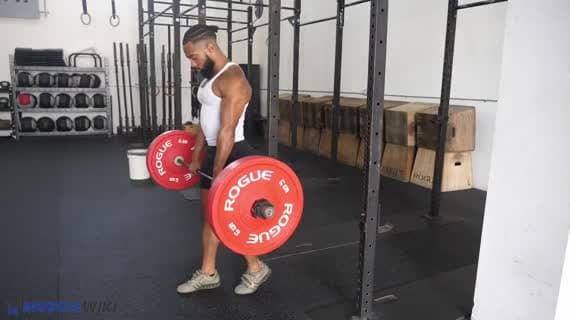
- Place one foot behind. You should only be on your toes on that back foot. Your front foot should be planted flat the entire time.
- Bend your back knee and push your hips back. Look for a stretch in your front hamstring.
- When you feel the stretch, push your hips forward again until you're back in a standing position.
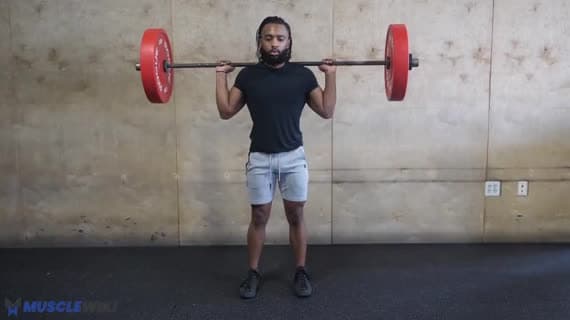
- Measure your hands by the markings on the bar to make sure you're even. Then throw your elbows underneath the bar.
- The bar should be set so high on your shoulders it digs into your neck a bit. Make sure to push your elbows up to the ceiling for the entire rep. To make sure you don't get too pitched forward.
- Use the squat stance you would use for a back or goblet squat. Push your hips back to initiate the squat. Break at the knees until you hit parallel depth.
- Squat back up to a standing position.
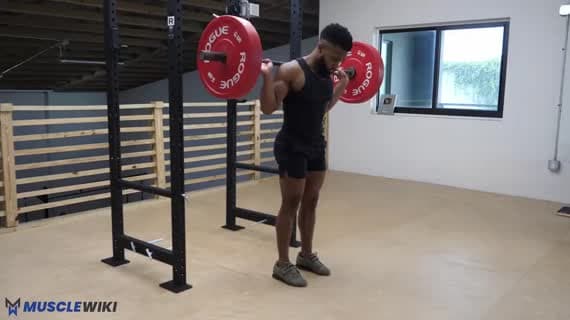
- Place the bar between your traps and rear delts. Pull your shoulder blades back to give the bar a shelf to sit on.
- Push your hips back until you feel a stretch in your hamstrings. This means you're nearing the end of your Range of Motion with out rounding your spine.
- When you feel the stretch push your hips forward until you'e in a standing position.
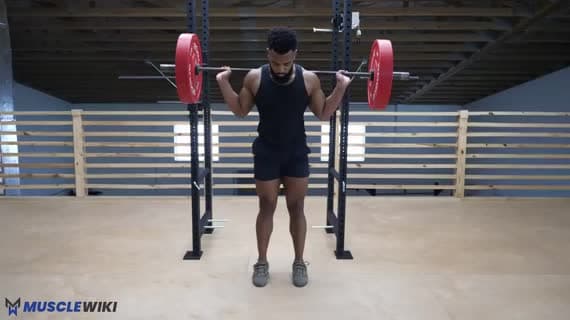
- Place the bar on your traps. You may need a pad so the bar doesn't dig into your cervical spine.
- Push your hips straight back. Your knees should stay MOSTLY extended (think soft knees). Also make sure to
- Look for what feels like a stretch in your hamstrings. The stretch feeling means you're likely nearing the end of your Range of Motion without rounding your spine.
- When you feel the stretch push your hips forward until you're in a standing position.